
Can You Stay for Just a Moment Longer?
The practice of mindfulness is often described as simple, but not easy. It is the practice of learning to bring your mind and awareness into the present moment. The purpose of being present is to cultivate clear-seeing, gaining a true understanding of the nature of ourselves and our experience, so we can make wiser choices in how we want to live our lives.
The problem is that we cannot see clearly when our minds are lost in thought, distracted, or attached to misguided beliefs that cause us suffering. Modern culture —and especially our technology — is continually pulling our attention away from the present moment. To be present briefly may be possible. The hardest part is learning to stay present long enough to gain valuable insight.
Let’s try a small experiment – Bring your attention into the present moment. Notice what is happening in this moment. Can you stay here — fully present — for just another moment longer? As you do, notice what gets in the way of presence.
The real key to mindfulness is seeing what gets in the way. We often complicate presence. We decide this moment isn’t good enough, or we believe it should be different than it is. We may feel impatient, restless, or bored. This may feel uncomfortable and our instinct is to escape discomfort — to reach for distraction, stimulation, or another thought. Doubt, analysis, self-criticism, and mind-wandering quickly join the party.
But if we stay with the discomfort for just a moment longer, something remarkable happens. We tolerate it. We see it more clearly for what it is – just a feeling that comes and goes. And we discover that we don’t actually need to run from it or stop it.
And then there are our thoughts. What do we do with all those thoughts? My suggestion: Nothing! Thinking does not mean you are not present, and mindfulness does not require the absence of thought. Presence includes it all!
When you are thinking, simply know you are thinking. In that moment of knowing, you create the possibility of not automatically engaging with your thoughts and beliefs. Instead, you can notice them without getting carried away by them or believing them. Just let those thoughts come and go.
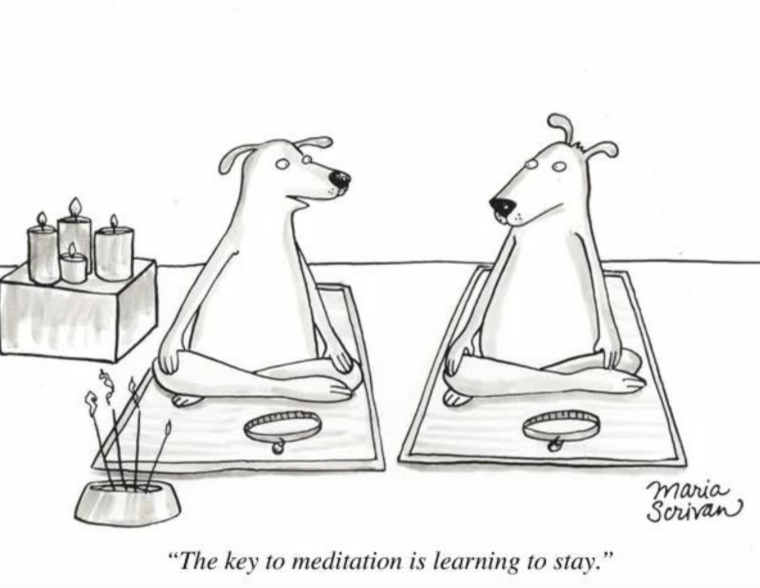
We can learn to stay. We don’t have to “leave” by diving into thoughts, stories, beliefs, or distractions. Instead, we gently return to what is happening right now – this includes the mind and its thoughts.
And when we do something magical happens. We begin to get to know the mind in the present moment, just as we get to know everything else, ourselves and our experience. Even our discomfort becomes something we can learn from — something we can be with.
Over time, we begin to see the impermanent nature of experience. Everything arises and passes. As we practice staying, we gain confidence in our ability to remain present for it all. And we begin to notice all the “extras” we add onto the present moment — the stories, judgments, long-held beliefs, and interpretations that cause us unnecessary anxiety, fear, and suffering.
Learning to stay is a quiet, but profound, shift. It is, in many ways, a superpower. It is the doorway to wisdom and freedom.